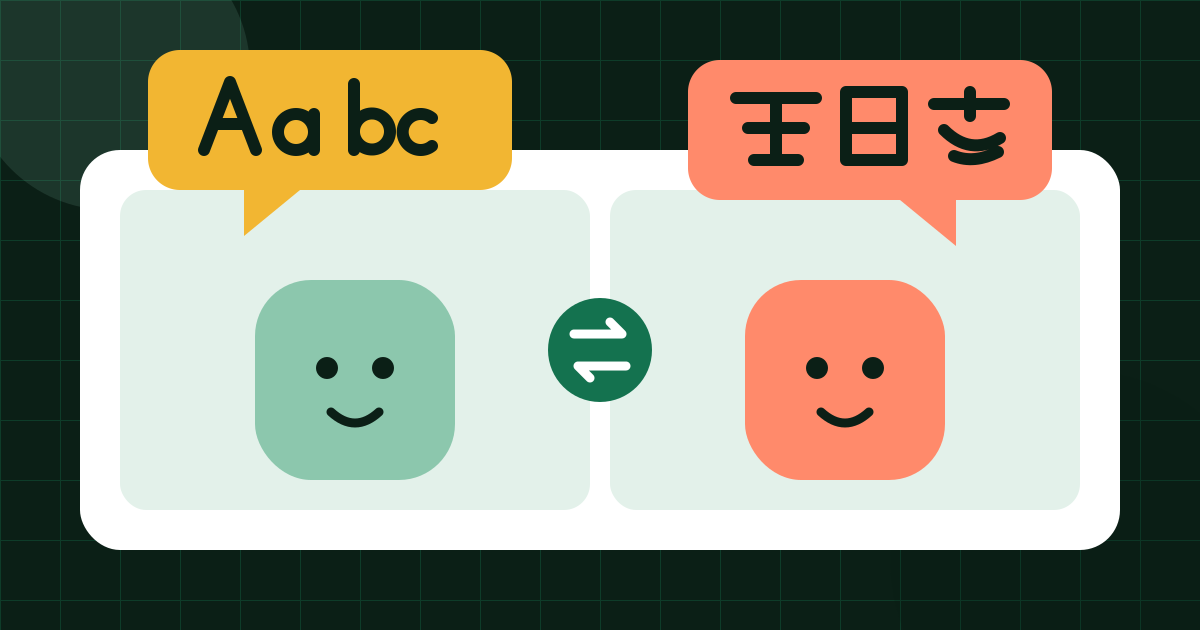
Apps can drill you on vocabulary for months, and then a real person asks you something at normal speed and your head goes blank. Speaking is a separate muscle. It only gets stronger when someone is waiting for your answer.
Random video chat is a cheap, slightly chaotic way to get those reps. Nobody you meet knows your teacher, your coworkers or your ex, so stumbling through a sentence costs you nothing. Here is how to make it work on Omigol, and where it won't.
First, the catch: you can't pick a country
Omigol matches you with the person who has sat in the queue longest for the same kind of call. There is no country filter and no interest matching, and the paid VIP filter only covers gender and age range. So you can't ask for "Spanish speakers in Mexico" and get them.
That sounds like a dealbreaker. In practice it mostly means you need a quick way to sort the people you meet, plus some patience. A lot of strangers speak a second or third language, and many of them are just as keen to use it as you are.
How to find someone who speaks it
Treat the first five seconds as a sorting step. Your goal is not a great conversation yet, just a yes or no on the language. A few things that speed it up:
- Open in the target language. A short greeting in Portuguese tells a Portuguese speaker exactly what you want. Everyone else will either shrug or answer in English, and you can move on politely.
- Ask directly. "Do you speak German, even a little?" is a fine first line. People answer honestly when it's a simple question.
- Pay attention to the hour. Who is online changes with the clock across the world. If you keep landing on the same few languages, try a different time of day and see who turns up.
- Don't burn out on misses. Press Next and try again. Ten quick misses for one good fifteen-minute chat is a decent trade.
- Offer a swap. "I'll help with your English if you help with my Korean" turns a favor into a fair deal, and the call tends to last longer.
Phrases worth having ready
Learn these in your target language before you start, so you aren't fumbling when the connection opens. Say them out loud a few times first. It feels silly and helps a lot.
- "I'm learning [language]. Can we talk slowly?"
- "Sorry, can you say that again?"
- "How do you say [word] in [language]?"
- "Please correct me if I make mistakes. I don't mind."
- "I understood that, I just need a second to answer."
- "Thanks, that helped. Good luck with everything!"
Use the text box as your notebook
Omigol has a text chat right beside the video, and for learners it might be the most useful button on the page. When a word comes out as a blur of sounds, ask them to type it. You see the spelling, they keep talking, and nobody has to repeat themselves four times.
It works the other way too. If you can't pronounce something yet, type it and let them say it back to you. Just keep a notes app open alongside, because the chat disappears when the call ends. Copy anything worth keeping before you press Next.
If your room is noisy while you think, the mute button gives you a moment. Tell them first, though, or it looks like you froze.
Keeping it a conversation, not a lesson
The person on the other end didn't sign up to be your tutor. Calls go better when you treat them as a chat that happens to be in another language. Ask about their city, their food, the weird thing on their wall. Real curiosity gives you more vocabulary than any phrasebook.
Keep corrections light. One fix per few minutes is plenty, and you'll remember the one that came up naturally. If they're tired of switching languages, let it go and finish in whatever is easiest. You still got practice listening.
And keep the usual caution. A language partner is still someone you met five minutes ago, so skip your full name, workplace and social handles. If someone wants to switch to a different app within minutes, that is worth a second look. Our guide to scams and red flags lists the common patterns.
Honest limits
Random chat is good for confidence and listening speed. It is bad at structure. Nobody will explain grammar in order, and you'll hear slang, regional accents and mistakes from native speakers who learned English the same messy way. Pair it with a course or a book if you want steady progress.
It is also uneven. Some evenings you'll find three great partners in twenty minutes. Other evenings nobody speaks your language at all. If you're learning a less common one, expect more misses, and consider meeting people in a group call of three, where your odds of a shared language go up a bit.
Finally, everyone on Omigol is 18 or older, and calls are recorded for moderation, and the privacy page has the details. That is fine for practicing verb tenses. Just don't say anything you'd mind a moderator hearing.